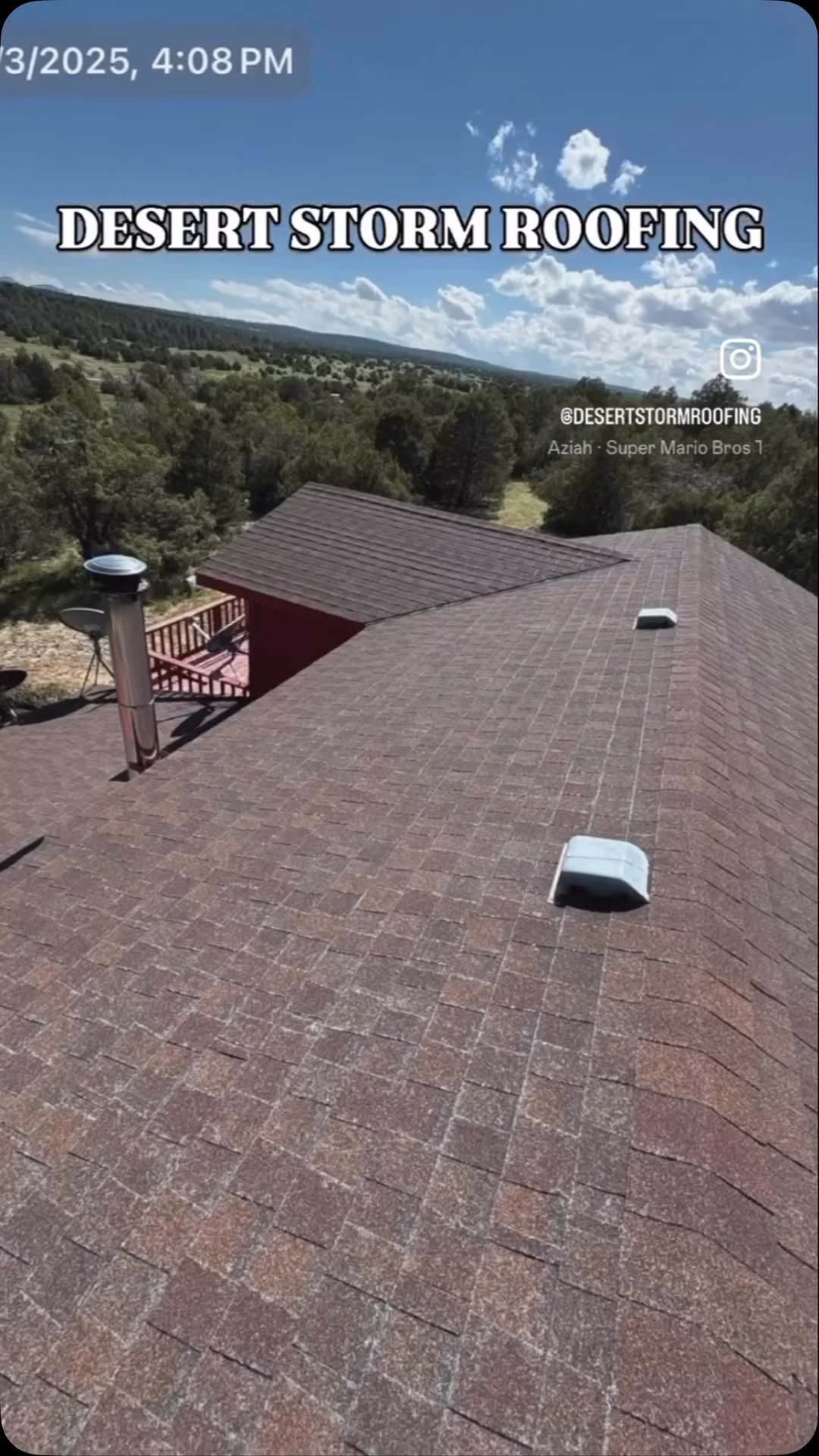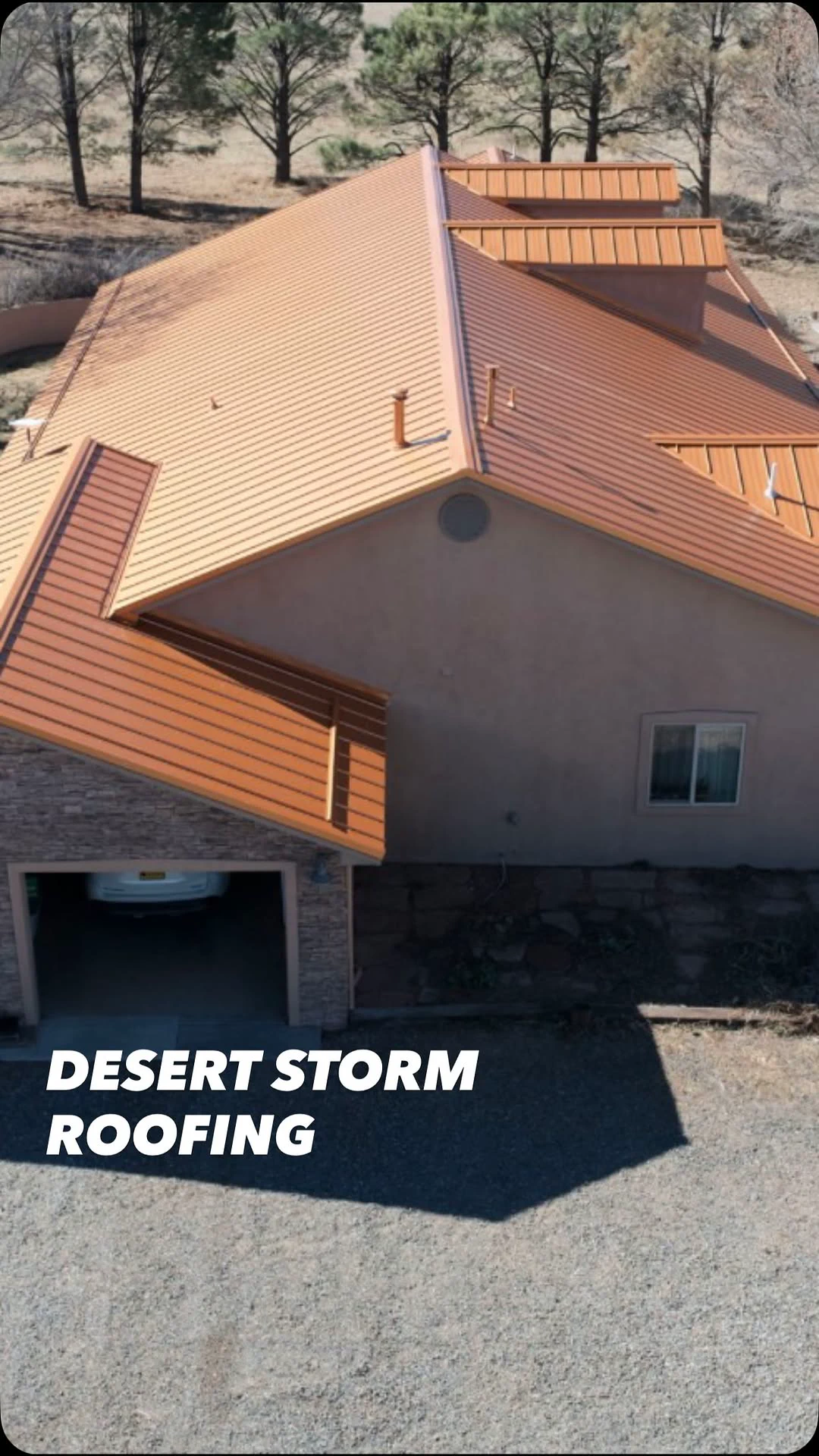
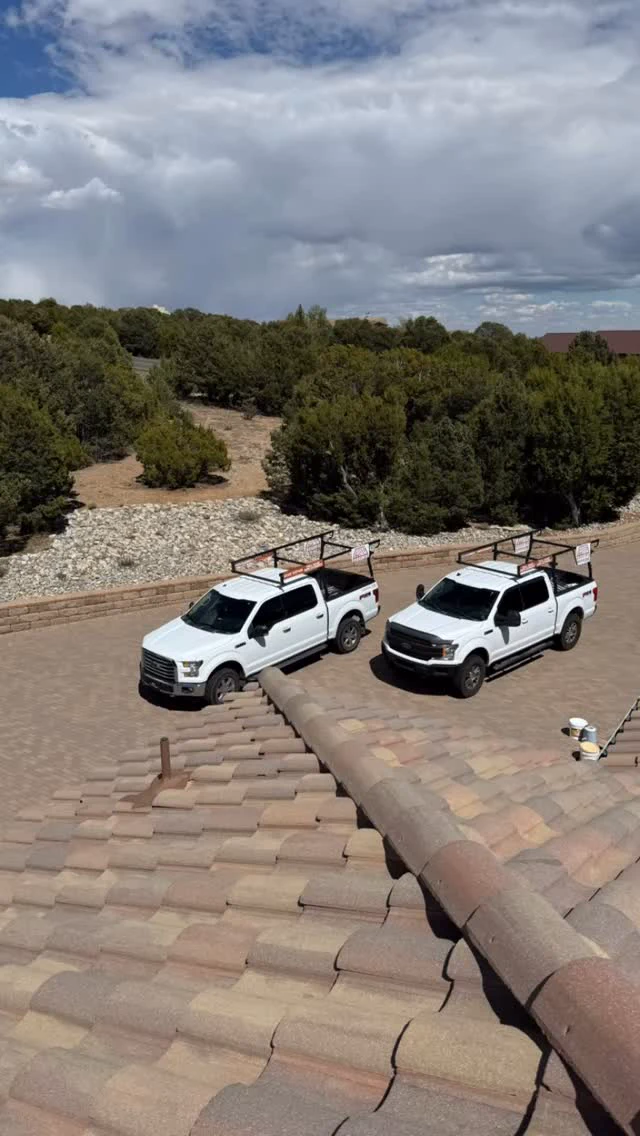
Central New Mexico’s open terrain can produce fast-moving dust and strong outflow winds around thunderstorms. The storm may pass quickly, but dust can remain in valleys, gutters, roof-to-wall transitions, drains, and equipment areas. Over time, those deposits can hide the details that keep a roof watertight.
Local note
Do not climb onto a roof during or immediately after a dust storm. Visibility, loose debris, and wet or slick surfaces can make a simple inspection unsafe.
Why dust matters at the roof surface
Windblown sand and grit can be abrasive when it moves across exposed finishes, metal edges, sealants, and already-weathered materials. Dust can also settle against flashing and fasteners, where it makes it harder to spot movement, corrosion, or failed sealant.
Dust is not automatically proof of roof damage. It is a reason to look more closely at the places where water is supposed to move away and where two materials meet.
Where the hidden problems collect
- Valleys, gutters, scuppers, drains, and downspout openings
- Roof edges, parapets, wall transitions, and flashing
- Pipe boots, vents, skylights, and mechanical penetrations
- Low-slope areas where dust and water can settle together
- Loose branches or debris left behind by outflow wind
How dust can become a water problem
A blocked drain or gutter changes where stormwater goes. Water that backs up can reach seams, edges, or penetrations that were not meant to hold standing water. On a low-slope roof, the combination of dust and moisture can be especially difficult to see until a ceiling stain appears.
Dust can also hide a missing fastener, a lifted shingle, or a cracked seal. Cleaning and inspection should focus on the roof system’s details, not only on making the surface look tidy.
Signs to check from a safe place
Look for new piles of debris, sagging or overflowing gutters, displaced trim, missing or lifted shingles, visible flashing gaps, and changes around roof penetrations. Inside the home, note new stains, musty areas, damp insulation, or water that appears after a storm rather than during ordinary rain.
If you see active leaking, move belongings away from the area and use a container if safe. Do not make a roof repair during dangerous weather.
A practical maintenance rhythm
Have drainage and roof details checked before the storm season, after a significant wind event, and whenever you notice a change. Keep trees and branches from rubbing the roof, and avoid pressure-washing or scraping materials in a way that can remove protective finishes.
Professional cleaning is not a substitute for a roof inspection. The goal is to find whether dust revealed or contributed to a condition that needs repair.
Protect the roof before the next dust wall
A documented inspection can identify loose edges, failing sealants, damaged flashing, or drainage restrictions while the repair is still manageable. Desert Storm Roofing can explain which findings are urgent and which can be planned.